Social Sparks: How Shared Challenges Build Player Networks Across Web Game Formats
Written by Kai Coleman · Aug 29, 2026
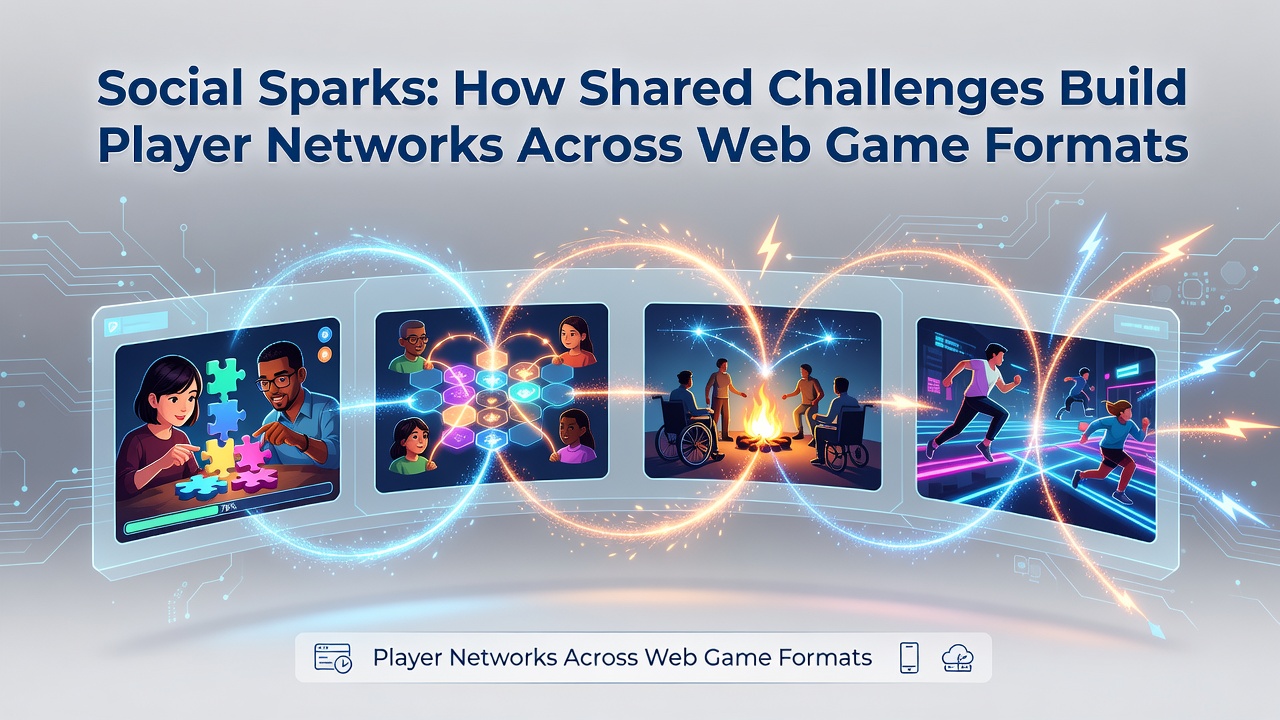
Social Sparks: How Shared Challenges Build Player Networks Across Web Game Formats
Shared challenges in web game formats create connections among players who might otherwise remain isolated in single-player sessions, and these interactions often lead to lasting networks that span puzzle, racing, strategy, and action genres. Browser-based platforms facilitate this process because they require no downloads and allow instant entry into cooperative or competitive scenarios where participants tackle identical obstacles together.
Mechanisms Driving Network Formation
Players encounter synchronized tasks such as timed puzzle sequences or joint navigation through racing tracks, and these setups encourage real-time communication through in-game chat or external forums. Data from industry reports show that such mechanics increase session duration and repeat visits, which in turn supports the emergence of persistent player groups. Researchers at various institutions note that shared problem-solving activates social reinforcement loops where success depends on coordinated input from multiple participants.
Web game formats amplify this effect through cross-device accessibility, allowing individuals on desktops, tablets, and mobiles to join the same session without technical barriers. In August 2026, figures from the Entertainment Software Association indicated steady growth in multiplayer browser participation, particularly in hybrid titles that blend racing elements with strategic decision points. Those who join these environments frequently form subgroups based on skill level or preferred challenge type, and these subgroups evolve into broader networks that migrate across different game formats.
Patterns Across Game Formats
Puzzle-focused browser games often incorporate leaderboards that display collective progress on community-wide challenges, prompting players to exchange strategies via linked social channels. Racing hybrids add another layer because participants must synchronize speed management with puzzle resolution, creating opportunities for mentorship where experienced users guide newcomers through complex loops. Strategy and action arenas extend the pattern further by introducing persistent worlds where shared events, such as defending a common objective, require ongoing coordination that spans multiple days or weeks.
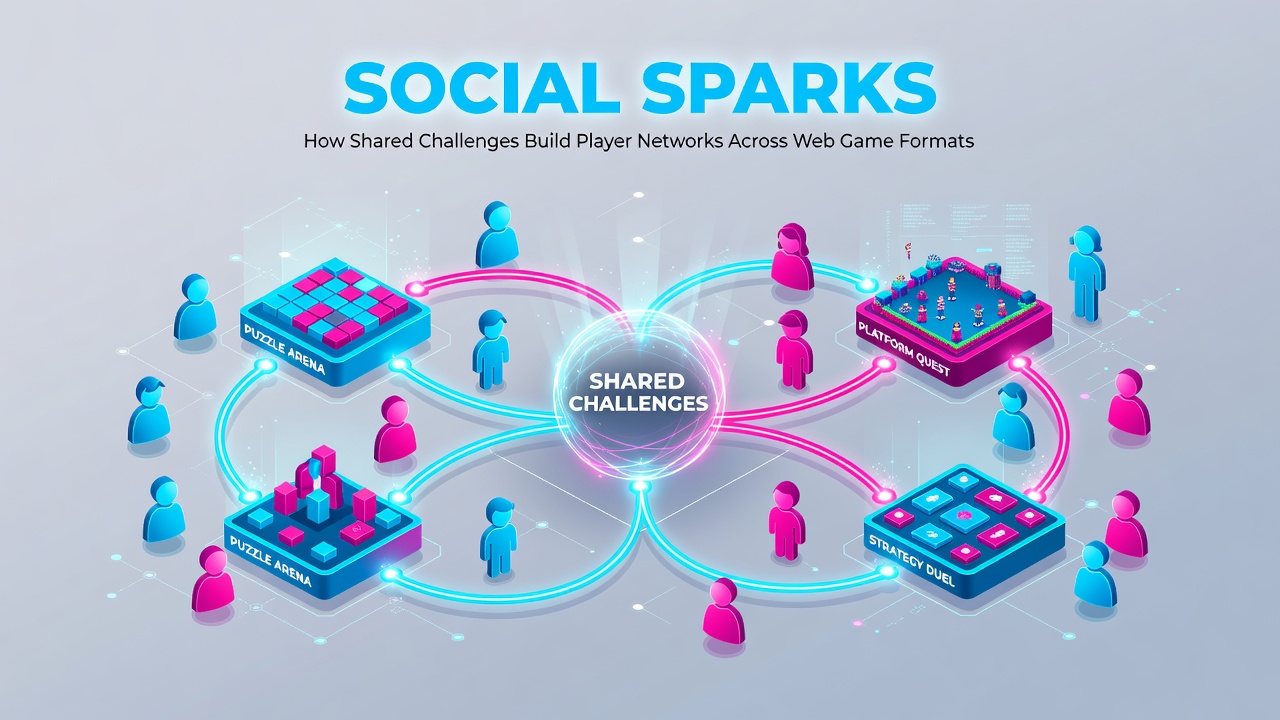
Observers note that these formats generate viral referral chains when players invite others to complete a difficult segment together. The Interactive Games and Entertainment Association in Australia has documented similar trends in regional data, highlighting how browser accessibility reduces entry friction and accelerates group formation around recurring challenges. Players who succeed in one format frequently carry their connections into another, transferring established communication patterns and trust structures to new environments.
Role of Progression Systems and Events
Daily or weekly events structured around shared goals keep networks active by resetting progress markers that demand fresh collaboration. Local storage features allow players to resume exactly where a group left off, which maintains momentum without requiring constant online presence. Progression mechanics that reward team achievements rather than individual scores further embed social ties because participants track collective milestones that appear on shared dashboards.
Sound design and streaming technologies support these dynamics by delivering synchronized feedback during joint efforts, reducing miscommunication that could fracture emerging networks. Studies from academic sources reveal that audio cues tied to group performance strengthen recall of successful strategies, encouraging repeated participation across formats. Those who study player retention patterns observe that networks built through shared challenges demonstrate higher loyalty metrics compared with purely competitive or solo modes.
Conclusion
Shared challenges continue to serve as the primary catalyst for player network development across web game formats, and the technical simplicity of browser environments sustains this process at scale. Evidence from multiple regions demonstrates consistent patterns where coordinated obstacles translate into durable social structures that players carry between genres. As formats evolve, the core mechanism of joint problem-solving remains central to how these networks expand and persist.