Browser Storage Solutions Enabling Persistent Progress Across Instant Strategy and Adventure Web Titles
Written by Sam Washington · Aug 25, 2026
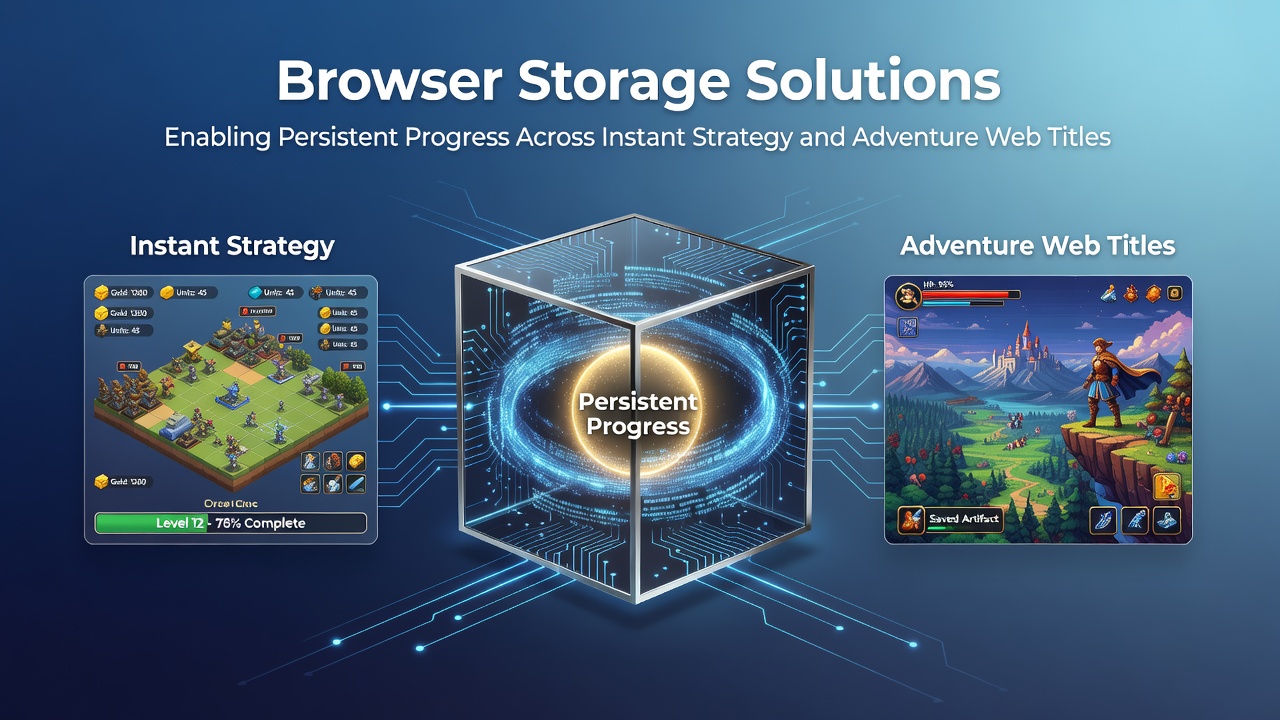
Browser Storage Solutions Enabling Persistent Progress Across Instant Strategy and Adventure Web Titles
Browser storage solutions have become central to how instant strategy and adventure web titles maintain player advancement without requiring installations or logins. These mechanisms allow games to retain data such as resource counts, map positions, inventory items, and quest statuses directly in the user's browser environment. Research from the World Wide Web Consortium indicates that standardized APIs have expanded capabilities for handling structured data in client-side applications since their introduction in the early 2010s.
Developers rely on several core technologies to achieve this persistence. LocalStorage provides simple key-value pairs that survive browser restarts yet remain limited to roughly five megabytes per domain. SessionStorage offers similar functionality but clears when the tab closes, which suits temporary checkpoints in fast-paced adventure sequences. IndexedDB handles larger datasets through object stores and indexes, enabling complex queries that track multi-stage campaigns in strategy titles where players manage alliances, build queues, and diplomatic relations.
Integration Patterns in Real-Time Web Games
Many instant-play platforms combine these tools with service workers to synchronize progress across devices. When a player advances through a procedurally generated adventure map or expands territory in a turn-based strategy scenario, the storage layer records changes at regular intervals. Data shows that synchronization routines triggered every thirty seconds reduce loss from unexpected tab closures or network interruptions. Observers note that this approach supports hybrid genres where quick decision cycles meet longer narrative arcs, because partial saves remain available even if the session ends abruptly.
Case examples include browser titles that serialize entire game states into JSON objects before writing them to IndexedDB. One developer collective documented how they migrated from cookie-based tracking to IndexedDB in 2024, resulting in a measurable increase in session length across their adventure catalog. Those implementations also incorporate encryption layers to protect sensitive progress data while complying with regional privacy regulations.
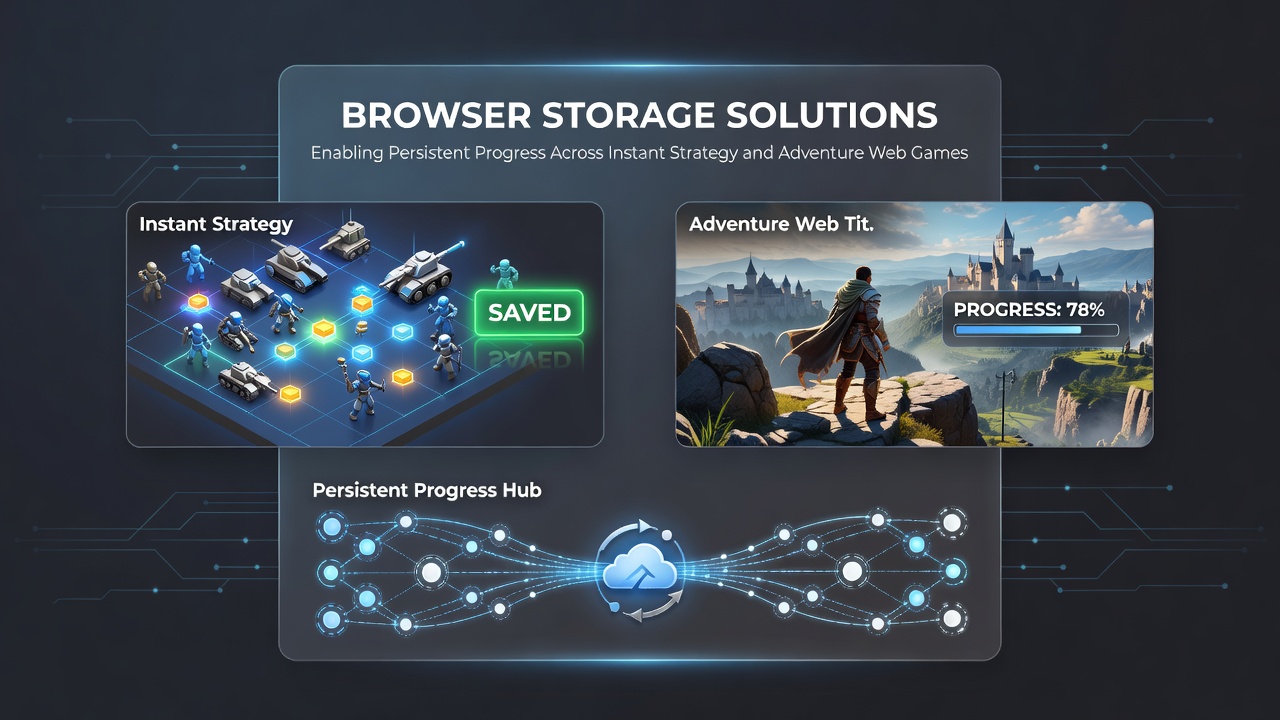
Performance and Capacity Considerations
Storage quotas vary by browser and device, yet most modern implementations grant at least 50 megabytes for persistent data. Strategy games that generate large world maps or adventure titles storing branching dialogue trees often compress records using libraries such as LZString before insertion. According to figures from the Entertainment Software Association, browser-based strategy and adventure segments grew by 18 percent in player hours during 2025, with storage reliability cited as a contributing factor in retention metrics.
August 2026 projections from industry analysts point to wider adoption of the File System Access API in Chromium-based browsers, which would let games request larger offline caches while maintaining user consent prompts. This shift could allow richer persistent worlds in titles that blend real-time resource management with exploration elements. European data protection guidelines continue to influence how these APIs expose storage permissions, prompting developers to implement granular opt-in controls rather than blanket access requests.
Security and Cross-Origin Practices
Cross-origin restrictions require careful configuration when embedding storage-dependent games inside iframes or social platforms. Origin isolation prevents one title from reading another domain's saved states, which protects competitive integrity in multiplayer strategy environments. Academic papers from institutions such as the University of Waterloo have examined timing attacks that exploit storage access patterns, leading to recommended mitigations including randomized write delays and minimal metadata exposure.
Many studios now employ versioned storage schemas so that updates to game mechanics do not corrupt older save files. Migration scripts run automatically on load, converting legacy localStorage entries into IndexedDB records when a new feature set launches. This practice keeps player progress intact across monthly content drops common in ongoing adventure series.
Future Directions for Persistent Web Experiences
Emerging standards around private aggregation and federated learning may further refine how storage solutions report aggregate usage without exposing individual progress. Industry reports from the Interactive Games and Entertainment Association in Australia highlight ongoing work to standardize save-state formats that would let players transfer advancement between different browser vendors. Such interoperability could expand the reach of instant strategy and adventure titles that currently depend on single-vendor storage quirks.
Implementation checklists used by development teams typically include quota checks before write operations, fallback paths to server-side profiles when client storage fills, and clear visual indicators when offline mode activates. These measures ensure that progress remains available whether the user returns in five minutes or five days.
Conclusion
Browser storage technologies continue to underpin reliable advancement tracking in instant strategy and adventure web titles. Through layered use of localStorage, IndexedDB, and supporting APIs, developers deliver seamless resumption across sessions while respecting capacity limits and privacy requirements. Data from multiple regions demonstrates steady growth in these genres tied directly to improvements in client-side persistence. As standards evolve through 2026 and beyond, the same foundational mechanisms are expected to support even more ambitious persistent worlds without leaving the browser environment.